Architecture İn Ottoman Empire
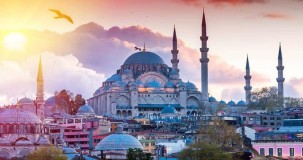
What was architecture like in the Ottoman Empire?, Common architectural elements included large domes, smaller surrounding buildings with semi-domes, entrances with horse-shoe shaped arches and, in the complexes surrounding mosques, towering minarets. Notable Ottoman architecture included many public and administrative buildings in Istanbul.
What was architecture like in the Ottoman Empire?
What was architecture like in the Ottoman Empire?,
Common architectural elements included large domes, smaller surrounding buildings with semi-domes, entrances with horse-shoe shaped arches and, in the complexes surrounding mosques, towering minarets. Notable Ottoman architecture included many public and administrative buildings in Istanbul. Who is the most famous Ottoman architect?
Who is the most famous Ottoman architect?,
Ottoman architecture used a limited set of general forms – such as domes, semi-domes, and arcaded porticos – which were repeated in every structure and could be combined in a limited number of ways. What was the style of architecture of the Turks?
What was the style of architecture of the Turks?,
Sinan. Sinan (born c. 1490, Ağırnaz, Turkey—died July 17, 1588, Constantinople [now Istanbul]) was the most celebrated of all Ottoman architects, whose ideas, perfected in the construction of mosques and other buildings, served as the basic themes for virtually all later Turkish religious and civic architecture. What contributions to art and architecture did Ottomans make?
What contributions to art and architecture did Ottomans make?,
The architecture of the early Ottomans experimented with different building types, including single-domed mosques, multi-domed buildings, and religious buildings with T-shaped floor plans. This eventually evolved into the Classical Ottoman style that was consolidated during the 16th and 17th centuries. What is unique to the Ottoman Empire?
What is unique to the Ottoman Empire?,
Despite local variations, the legacy of the sixteenth-century Ottoman artistic tradition can still be seen in monuments from the Balkans to the Caucasus, from Algeria to Baghdad, and from Crimea to Yemen, that incorporate signature elements such as hemispherical domes, slender pencil-shaped minarets, and enclosed ... What is Ottoman design?
What is Ottoman design?,
The Ottomans were known for their achievements in art, science and medicine. Istanbul and other major cities throughout the empire were recognized as artistic hubs, especially during the reign of Suleiman the Magnificent. Who is the best architect in Turkey?
Who is the best architect in Turkey?,
Ottomans were first introduced into Europe from Turkey (the heart of the Ottoman Empire, hence the name) in the late 18th century. Usually a padded, upholstered seat or bench without arms or a back, they were traditionally heaped with cushions and formed the main piece of seating in the home. What is one piece of architecture the Ottomans were famous for?
What is one piece of architecture the Ottomans were famous for?,
The Ottoman Empire was and is famous for the elaborate design of mosques and mosque complexes that were built. The most famous examples of such architectural designs are the Suleymaniye Mosque complex and the Hagia Sofia, or Blue Mosque complex, both in Istanbul. Who was the chief architect of the Ottoman Empire?
Who was the chief architect of the Ottoman Empire?,
The individual most responsible for developing and refining the classical Ottoman architectural style was a builder named Sinan (1491–1588), who served as the empire's chief architect from 1539 until his death in 1588. What is the oldest architecture in Turkey?
What is the oldest architecture in Turkey?,
Göbekli Tepe. Located in the Germuş mountains of south-eastern Anatolia, this property presents monumental round-oval and rectangular megalithic structures erected by hunter-gatherers in the Pre-Pottery Neolithic age between 9,600 and 8,200 BCE. 



 Blog
Blog